
Engineered vs. Solid Hardwood: Which One Is Right for You? (Quick Overview)
Picking between engineered and solid hardwood floors depends on how you use your space and what you need from your floors. Both have the beautiful look of real wood, but their makeup and how they handle daily conditions are different. This helps you decide which is best for your home.
Key Differences in Simple Terms
Solid hardwood is one piece of wood, making it very strong and able to be refinished many times. Engineered hardwood has layers with real wood on top, which makes it stable and better with moisture and temperature changes. Solid hardwood is known for lasting a long time, while engineered hardwood is more adaptable.
When Each Option Makes the Most Sense
Solid hardwood is great for upstairs areas like living rooms and bedrooms where moisture isn’t a worry and lasting value matters. Engineered hardwood is more flexible—it can go in basements, over concrete, and in places with changing humidity. If your home has tricky conditions, engineered is often the better choice.
Quick Decision Guide for Homeowners
If you want a floor that lasts for years and can be refinished many times, solid hardwood is a good buy. If you need something more flexible, easier to install, and better for wet areas, engineered hardwood is usually smarter. Many homeowners decide based on where the floor is going and how much flexibility is needed.
Quick Comparison: Engineered vs Solid Hardwood Flooring
| Feature | Engineered Hardwood | Solid Hardwood |
|---|---|---|
| Construction | Multi-layer core with real wood top layer | 100% solid wood throughout |
| Moisture Resistance | Excellent (handles humidity & spills better) | Low (prone to warping & expansion) |
| Installation Options | Glue-down, floating, or nail-down | Primarily nail-down only |
| Subfloor Compatibility | Works over concrete & plywood | Best for plywood subfloors only |
| Refinishing Ability | Limited (depends on wear layer) | Can be refinished multiple times |
| Durability | High (stable under changing conditions) | Very high (long lifespan if maintained) |
| Best Locations | Basements, kitchens, condos | Living rooms, bedrooms, main floors |
| Cost (Material) | Moderate | Higher upfront cost |
| Lifespan | 20–40 years (depending on quality) | 50+ years with refinishing |
| Stability | Very stable (less expansion/contraction) | Expands & contracts with humidity |
| DIY-Friendly | Yes (floating options available) | Less DIY-friendly |
What This Means for You
If you need flexibility, moisture resistance, and easy installation, engineered hardwood is often better. If you want long-term value and floors that can be refinished for years, solid hardwood is best. The right choice depends on your home’s needs and how long you plan to stay.

What Is Solid Hardwood Flooring? (Pros, Cons & Best Use Cases
Solid hardwood flooring is a classic choice known for its quality and value. Made from one piece of natural wood, it looks real and can last for many years if taken care of well. How well it works depends on the place and method of installation.
How Solid Hardwood Is Made
Solid hardwood planks are made from a single piece of wood, usually ¾ inch thick. This gives the boards strength and a solid structure. Since it’s all wood, it can be sanded and refinished many times, keeping it looking good and strong over the years.
Key Advantages: Longevity & Refinishing Potential
A big advantage of solid hardwood is its long life. With the right care, it can last over 50 years, making it a smart long-term choice. You can refinish it many times to get rid of scratches and wear, giving it a new look without replacing it.
Limitations: Moisture Sensitivity & Expansion
Solid hardwood is tough but can be affected by moisture and humidity. It expands and contracts with weather changes, which might cause warping or gaps if not managed well. It’s not ideal for places with high moisture or changing conditions.
Best Rooms and Environments for Solid Hardwood
Solid hardwood is best in stable, above-ground places like living rooms, dining areas, and bedrooms. These rooms usually have steady temperature and humidity, helping the wood keep its shape and performance. In the right place, solid hardwood offers timeless beauty and lasting value.
What Is Engineered Hardwood Flooring? (Pros, Cons & Best Use Cases)
Engineered hardwood flooring looks like real wood but is more stable and versatile. It has a natural wood surface, but its layers make it work better in places where regular wood might not.
How Engineered Hardwood Is Constructed
Engineered hardwood has several layers. The top is real hardwood (the wear layer), and the core is plywood or high-density fiberboard arranged in opposite directions. This makes it stronger and limits the natural movement seen in solid wood.
Why It Performs Better with Moisture and Humidity
Its design makes engineered hardwood more resistant to moisture and temperature changes. It doesn’t expand or contract as much as solid hardwood, making it more stable in areas with changing humidity. This stability lets it be used where solid hardwood usually isn’t advised.
Durability & Wear Layer Explained
The wear layer thickness affects engineered hardwood’s durability. A thicker wear layer can handle more use and sometimes light refinishing. While it might not last as long as solid hardwood for refinishing, good quality engineered flooring is still very durable for busy homes.
Best Applications for Engineered Hardwood
Engineered hardwood works well in places with moisture or tricky subfloor conditions, like basements, kitchens, condos, and homes with concrete subfloors. Its flexibility in installation and ability to handle environmental changes make it a smart choice for modern homes.
Engineered vs Solid Hardwood: Key Differences That Matter
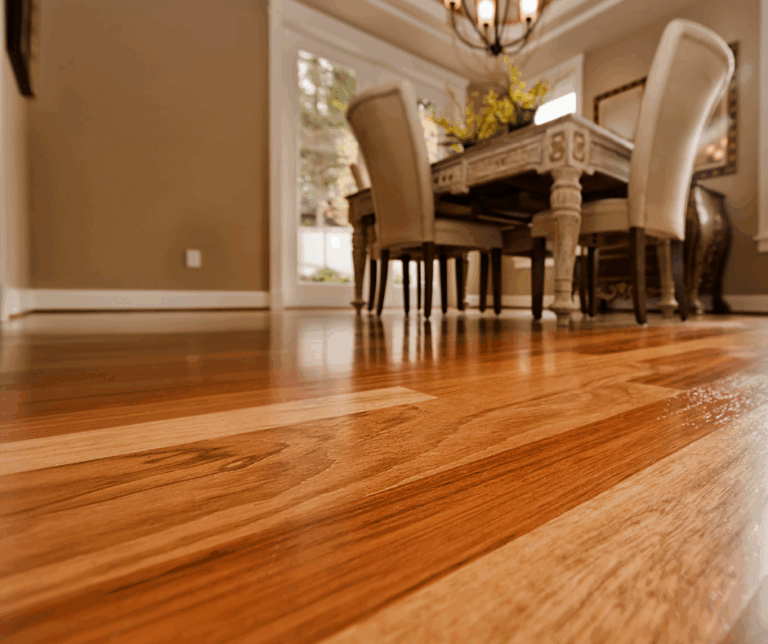
Engineered and solid hardwood look similar, but they work differently in different home settings. Knowing these differences helps you pick the right floor for your life.
Structure & Construction
The main difference is how they are made. Solid hardwood is one piece of wood, while engineered hardwood has layers for better stability.
Moisture Resistance & Stability
Engineered hardwood handles changes in humidity and temperature better, making it more stable. Solid hardwood can expand and contract.
Refinishing & Lifespan
Solid hardwood can be refinished many times, lasting longer. Engineered hardwood has limits based on its top layer thickness.
Installation Flexibility & Cost
Engineered hardwood offers more ways to install and works in more home areas. Solid hardwood needs specific conditions and can cost more initially.
Quick Comparison: Key Differences
| Feature | Engineered Hardwood | Solid Hardwood |
|---|---|---|
| Construction | Multi-layer core | Solid wood throughout |
| Moisture Resistance | High | Low |
| Stability | Very stable | Expands & contracts |
| Refinishing | Limited (depends on wear layer) | Multiple times |
| Lifespan | 20–40 years | 50+ years |
| Installation Options | Glue, float, nail | Nail-down mostly |
| Cost | Moderate | Higher upfront |
| Best For | Basements, kitchens, condos | Living areas, bedrooms |
What This Means for You
If your home has moisture or changing conditions, engineered hardwood is usually a safer and more flexible choice. For long-term value with the option to restore, solid hardwood is a top choice.

Durability & Moisture Performance: Which Hardwood Flooring Holds Up Better Over Time?
When comparing engineered and solid hardwood, performance over time depends on two main things: how floors resist wear and how they handle moisture and climate changes. These factors affect how your floors look and work long after they are installed.
Resistance to Scratches, Dents & Daily Wear
Both engineered and solid hardwood are strong, but their durability varies with the environment. Solid hardwood is sturdy and lasts long, but it can get scratches and dents in homes with kids and pets. Engineered hardwood, though thinner, often does better in busy homes due to its stable layered construction.
High-Traffic Homes, Kids & Pets
In busy areas, engineered hardwood usually stays in good shape because it resists movement and shifting. Solid hardwood can also do well, but it might show wear sooner in busy settings unless maintained over time.
Moisture, Humidity & Seasonal Changes
This is where they differ most. Engineered hardwood handles humidity, spills, and temperature changes with little expansion or contraction. Solid hardwood reacts to moisture, which can cause warping, cupping, or gaps if conditions are unstable.
Best Choice by Environment
For basements, kitchens, coastal homes, or humid areas, engineered hardwood is usually safer and more reliable. Solid hardwood is best for above-ground spaces with stable environments, where moisture isn’t a worry and refinishing can be done over time.
What This Means for You
If your home has stable conditions and you want long-lasting floors, solid hardwood is a good choice. But if you need floors for real-life conditions like kids, pets, and climate changes, engineered hardwood often performs better day-to-day with fewer issues.
Installation Differences: What Homeowners Need to Know
Installation affects where and how each floor type is used. Engineered hardwood is more adaptable, while solid hardwood needs specific conditions and skills.
Quick Installation Breakdown
| Topic | Engineered Hardwood | Solid Hardwood |
|---|---|---|
| Installation Methods | Glue-down, floating, or nail-down | Primarily nail-down |
| Subfloor Requirements | Works on plywood & concrete | Requires plywood subfloor |
| Installation Time | Faster, more efficient | Slower, more labor-intensive |
| DIY vs Professional | More DIY-friendly | Best installed by professionals |
What This Means for You
If you want flexibility and faster installation, engineered hardwood is usually easier. For a traditional choice and long-term value, solid hardwood is worth the effort if conditions are right.

Cost Breakdown: Engineered vs Solid Hardwood
When you look at engineered and solid hardwood, the cost is more than just the material. Installation, care over time, and how long it lasts all affect what you’ll spend in the long run.
Material vs Installation Costs
Engineered hardwood usually costs less upfront, both for materials and installation. It’s easier to install, making labor quicker and cheaper. Solid hardwood costs more upfront and takes more work to install, which raises the project cost.
Budget vs Premium Options
Both types have different price levels. Engineered hardwood is more budget-friendly, while solid hardwood is in the mid-to-high price range due to its thickness and durability. High-end choices of both can be similar in price based on wood type and finish.
Cost vs Lifespan (Long-Term Value)
Solid hardwood can last a long time and be refinished often, making it a good long-term choice. Engineered hardwood is also durable, but its lifespan depends on the wear layer thickness. It may not last as long as solid wood but offers good value where moisture or installation is a concern.
Quick Price Comparison (What You Can Expect)
| Cost Factor | Engineered Hardwood | Solid Hardwood |
|---|---|---|
| Material Cost (per sq ft) | $3 – $10 | $5 – $15+ |
| Installation Cost | $3 – $6 | $5 – $10 |
| Total Installed Cost | $6 – $16 | $10 – $25+ |
| Refinishing Potential | Limited (depends on wear layer) | Multiple times (long lifespan) |
| Long-Term Value | Great for most homes & budgets | Best for maximum lifespan |
What This Means for You
If you want something more affordable and flexible, engineered hardwood is a great choice with low upfront costs. If you want a long-term investment that can be refinished over time, solid hardwood is worth the higher starting price.

Maintenance & Lifespan: What to Expect Long-Term
Choosing between engineered and solid hardwood involves thinking about care and how long they last. Both are easy to look after daily, but they differ in how they hold up over time.
Cleaning & Everyday Upkeep
Both types need regular sweeping or vacuuming and sometimes damp mopping with products safe for hardwood. They don’t like too much water, so clean spills quickly.
Refinishing Potential (Key Difference)
Here’s where they differ most. Solid hardwood can be sanded and refinished many times, making it look new even after years. Engineered hardwood can be refinished too, but only if it has a thick wear layer, and not as many times.
Lifespan Expectations
Solid hardwood can last 30–100+ years if cared for well, making it a long-term choice. Engineered hardwood usually lasts 20–40 years, depending on quality. Better-engineered products with thicker layers last longer.
When Replacement Becomes Necessary
Engineered hardwood might need replacing when the wear layer is too thin or worn out. Solid hardwood can often be fixed instead of replaced, adding to its lasting value.

Final Verdict: Engineered vs Solid Hardwood — Which Should You Choose?
Choosing between engineered and solid hardwood depends on your home’s daily needs. Both have the beauty of real wood, but the best choice depends on your environment and budget.
A Simple Decision Guide Based on Your Lifestyle
If your home has changing humidity, a concrete base, or busy areas with kids and pets, engineered hardwood is often the better choice. If you have a stable environment and want long-lasting floors, solid hardwood is a great investment.
When Engineered Hardwood Is the Better Choice
Engineered hardwood is perfect for modern living, especially in basements, kitchens, condos, or places with moisture and temperature changes. It is flexible, easy to install, and works well in real-life conditions.
When Solid Hardwood Is Worth the Investment
Solid hardwood is best for those who want long-lasting value. It can be refinished multiple times, making it ideal for living rooms, dining areas, and other stable places.
Key Takeaways for a Confident Decision
There is no single answer — the best choice matches how you live. Engineered hardwood offers ease and versatility, while solid hardwood provides long life and classic beauty. Choosing the right one ensures your floors look great and work well for you.
Need Help Choosing Between Engineered and Solid Hardwood?
Now that you know the basic differences — from installation and cost to durability and long-term value — you’re better prepared to make the right choice. With so many options in wood types, finishes, plank sizes, and styles, it’s easy to feel unsure about what will work best in your home.
That’s where we come in. Our flooring experts help you compare engineered and solid hardwood based on your space, subfloor, lifestyle, and budget — so you don’t end up with a floor that looks good now but causes issues later.
We handle everything from personalized product suggestions and moisture checks to professional installation and long-term planning. Whether you’re interested in the flexibility of engineered hardwood or the lasting durability of solid wood, we’ll help you make an easy, confident decision.
Click here to schedule your free in-home consultation and take the next step toward a floor that’s built to last.